I tell people the first question they should ask themselves is, “Would you drink this again?” If it’s not a hell yes, then it’s a no. In other words, a mediocre coffee to you. That last point matters, because we all experience a cup differently. The coffee itself, the cup it’s served in, the ambiance, the temperature—it’s all quite personal.
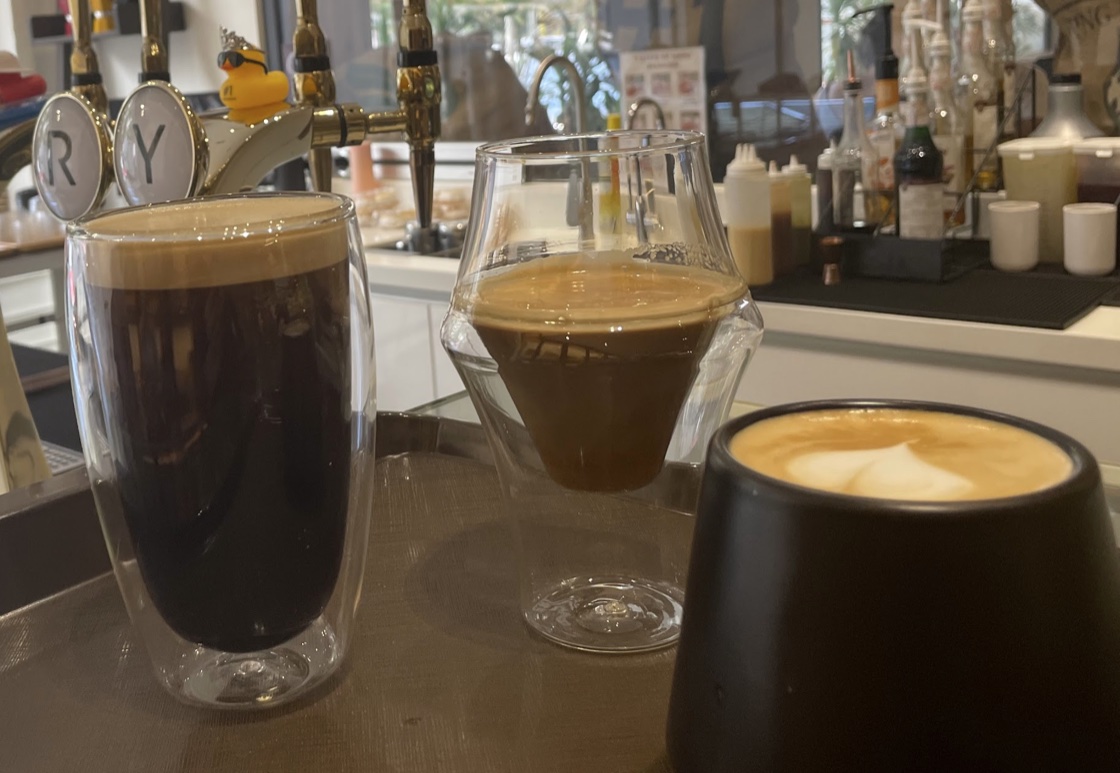
Roasting coffee, attending workshops and drinking more varieties has made me think harder about what exactly makes a good cup of coffee.
In What Does a Great Cup of Coffee Taste Like?, James Hoffmann compares great coffee to music. It’s not about any single note, but how the different elements come together to create something memorable. His reflection on sadness and anticipation resonates with me: a wonderful cup is fleeting, but it leaves you looking forward to the next one.
It reminds me of ichigo ichie, a Japanese expression often translated as “one time, one meeting.” I think of it as a reminder that an encounter will never happen in exactly the same way again, so we should treasure it and be present. For me, that anticipation begins as espresso pours into the cup and the familiar aroma rises.
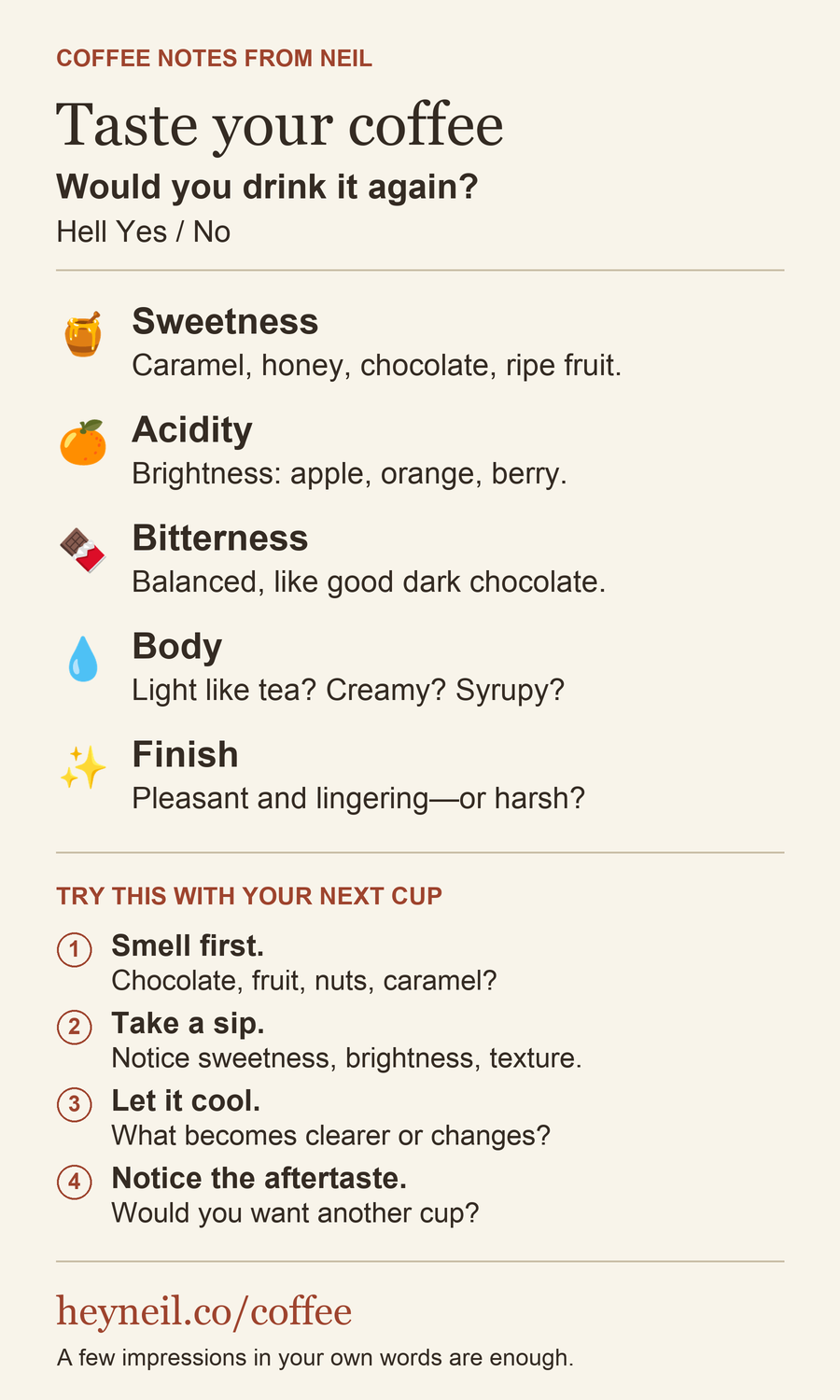
Five things to notice
You don’t need an elaborate tasting vocabulary to enjoy coffee. A few words can help you notice what you like and describe it to someone else.
- Sweetness. Coffee can bring to mind caramel, honey, chocolate or ripe fruit, even without added sugar. These impressions involve aroma as well as taste, as the Specialty Coffee Association explains. Sweetness is one of my favorite things to find in a cup.
- Acidity. Think of the brightness you experience biting into an apple, orange or berry. Notice whether it feels lively and pleasant, sharp, or barely there. You don’t have to prefer a bright coffee to appreciate one.
- Bitterness. Bitterness is part of coffee. For me, it works best when it complements the other flavors. Think about the balance in a piece of dark chocolate.
- Body. What does the coffee feel like in your mouth? Is it light like tea, creamy and silky, or heavy like syrup?
- Finish. Notice what remains after you swallow. Is the aftertaste pleasant and lingering, or harsh, ashy and dry?
These aren’t five boxes a coffee has to tick. They’re ways to pay attention. A light, bright cup and a rich, chocolatey one can both be memorable.
Try this with your next cup
- Smell it first. Do you notice chocolate, fruit, nuts or caramel? Start with whatever comes to mind.
- Take a sip. Notice the sweetness, acidity and texture. You don’t need to name a particular fruit.
- Leave some to taste as it cools. See what changes. Does a flavor become easier to recognize? Do you enjoy it more or less?
- Notice the aftertaste. Then return to the first question: would you drink this again?
Over time, you may find yourself drawn to traditional chocolatey, nutty flavors, or to lighter, more fruit-forward coffees. Your preferences may change with the day, too.
The vocabulary is there to help you understand your experience. The pleasure is in the cup.
Coffee tasting cheatsheet
Keep this card handy for your next cup. It brings the five things to notice and the tasting exercise together in one place.