“My father rode a camel, I drive a Mercedes, my son drives a Land Rover, his son will drive a Land Rover, but his son will ride a camel… raise warriors, not parasites.”*

A colleague has been teaching his daughters financial literacy for the last decade, the result, they’re empowered, understand interest, basic investment strategy and tradeoffs. The money they’ve saved will pay for a nice chunk of their college tuition!
Some takeaways:
- Start simple and start early — Each week provide a simple allowance, review monthly and provide a high interest rate to illustrate the power of saving/spending tradeoffs. His 4 year old would opt for $1 candy bar instead of $5 because they knew $0.50 interest cost.
- Cover basic needs but the rest is on them — If they need jeans or a standard iPhone fine, but they’re on their own for designer jeans or that latest tech.
- Create incentives to encourage measured risk taking — As they get more sophisticated create incentives to invest, rather than keep accusing interest in a simple checking account, for example allow $1k increments to be invested in a joint trading account. Then teach them about value investing.
- Set a goal of obtaining financial literacy — Take the training wheels off by college, require them to pay for half using the funds they’ve accumulated as you create an annual budget. He talked about setting a goal that they should be prepared to ‘be on their own’ by the end of college.
The result, kids who are ready to take on the world. There are so many folks out there who are afraid of finance, or outsource it to a financial advisor, much less teach their kids anything about money. My dad taught me the ups and downs of investing in the stock market, and without exact intentions, taught me about portfolio diversification, measured risk taking and the miracle of compound returns.
I believe teaching financial literacy to your kids is one of the best investments you can make, providing long generational returns. Your kids will be empowered, independent, and lead lives a little less stress induced by financial troubles, with a strong possibility they pass those lessons on.
2026 Update: Nuts and Bolts of Allowance
- Around age 5, kids begin doing chores for points (folding their laundry, keeping their bed tidy, etc)
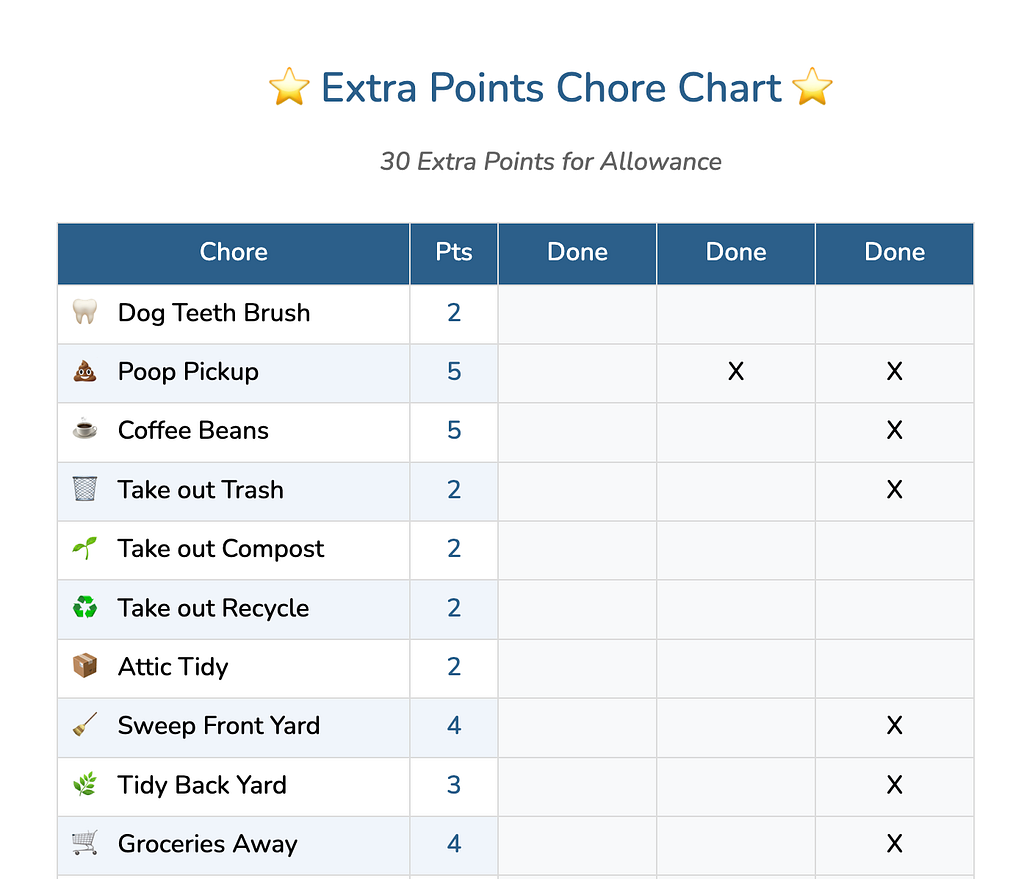
- To earn weekly allowance, must do weekly assigned chores (clean up breakfast table, open curtains) AND complete a few extra chores.
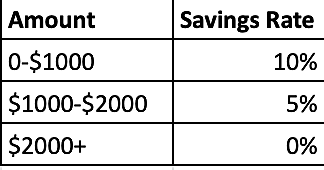
- Weekly allowance amount is small and can be traded for $10 and $100 coupons. On the first of the month, coupons earn 10% interest. They won’t understand the interest part, the point is that more coupons = more extra cash for doing nothing. It creates a saving mentality.
- At $500, eligible to open a bank account (Chase makes it really easy and they get their own debit card).
- Interest caps out at $2,000, amounts over that can be invested in a brokerage account (UMTA). These amounts cannot be withdrawn, meant for college expenses.
- Bonus: spending must be done on allowance days (eg, Sunday), to create thoughtful spending practices. I’ve seen some people do a mandatory 50% savings, 25% spend, 25% charity sort of budgeting.
- Note: let them spend money on dumb things, it’s the way they learn, think of it as a cheap lesson. we’ve seen our kids adjust their thought process trying to get value for their money on their own.